

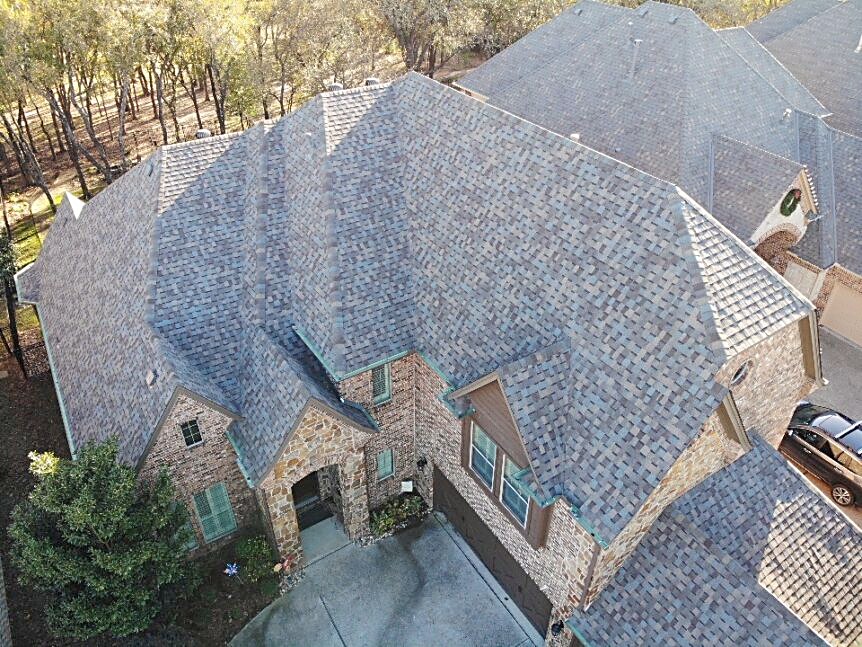
Will my insurance pay for a new roof in Texas?
Homeowners insurance in Texas generally pays for roof damage caused by a covered event, such as hail or a windstorm. It does not pay to replace a roof that has worn out with age. Coverage also depends on your policy: some policies pay the full replacement cost, while others pay actual cash value, which subtracts depreciation for the age of the roof.
Storm damage is covered, normal wear is not
Insurance policies cover sudden damage from events like hail and wind. Damage that happens slowly over many years, such as curling shingles or granule loss from age, is considered normal wear and is not covered.
When an adjuster inspects your roof, they look for damage that matches a specific storm. Insurance companies can check weather records for your address, so it helps to know the date the storm happened.
Replacement cost and actual cash value
A replacement cost policy pays what it costs to replace your roof today, minus your deductible. The payment is often made in two parts: an initial payment, and a second payment for recoverable depreciation after the work is complete.
An actual cash value policy subtracts depreciation based on the age of the roof, so the payment on an older roof can be much lower. Many Texas insurance companies now use actual cash value or a roof payment schedule for older roofs.
Check your declarations page for the terms "actual cash value" or "roof surfaces payment schedule" so you know what type of coverage you have.
Your wind and hail deductible
Many Texas policies have a separate wind and hail deductible, often 1 to 2 percent of your dwelling coverage. On a home insured for $400,000, a 2 percent deductible is $8,000.
If the cost of the repair is less than your deductible, a claim will not pay anything. A full roof replacement will usually cost more than the deductible.
Texas law does not allow a contractor to pay, waive or rebate your deductible.
How to prepare for a roof claim
Have your roof inspected as soon as possible after a storm, and write down the date the storm happened.
Take photos of any damage you can see from the ground, such as dented gutters, vents or window screens.
After you file, Century Roofing and Construction can meet with your insurance adjuster to inspect your property and help explain the paperwork.
Related Questions
Does filing a hail claim raise my rates?
A weather-related claim is generally treated differently from an at-fault claim. Several claims on the same property in a short period are more likely to affect your premium or coverage at renewal. Your insurance agent can tell you more about your policy.
How long do I have to file after a storm?
Texas policies set a deadline for filing a claim, and it is usually counted from the date of the storm. Waiting can also make it harder to show which storm caused the damage.
Can I keep the insurance money and not replace the roof?
On a replacement cost policy, the depreciation payment is usually released only after the work is done. The claim also stays on the property record, which a future buyer may see.
